
Nice, France with Kids 2026: The Multigenerational Guide
Most Nice guides are written for toddlers or billionaires. Not this one.
“From where I sit I can see the smoky peaks of the Alps rising behind a town that was old before Alexander the Great was born.”

Rachel, Ellie, & Sophie, posing at the Nice sign, overlooking the Mediterranean Sea.
Last Updated: May 2026
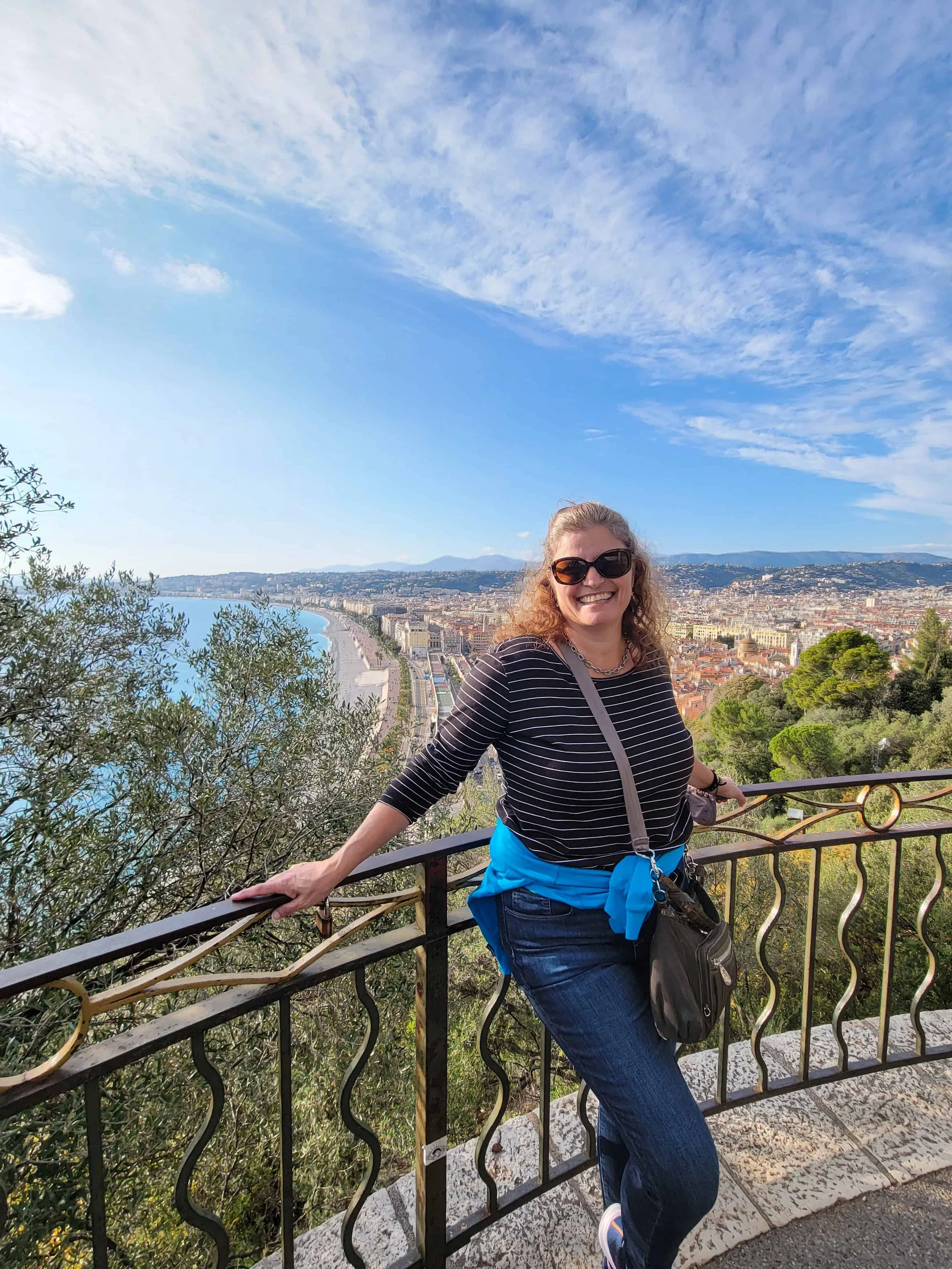
Colleen is a full-time traveler, worldschooling mom, and co-founder of Uncommon Family Adventures. She has been homeschooling since 2021 and has been traveling internationally full-time with her family for the last 2 years.
She writes specifically about multigenerational trips that work for groups spanning tweens, teens, and grandparents simultaneously. This guide is based on her nearly two weeks living on the French Riviera.
We spent 11 days in Nice and the surrounding French Riviera. Five of us, three generations' worth of needs, one penthouse terrace in Saint-Laurent-du-Var, and more French pastries than was probably medically advisable.
Our group: Kevin and I, our college-age daughter, and our two younger daughters, spanning tween to teen. We are navigating the world as a multi-generational unit, balancing the autonomy of a young adult with the high-energy needs of a tween. That specific span is the lens through which this entire guide is written.
Most family travel content about Nice with kids falls into one of two categories. The first is the glamour version: yachts, celebrity sightings, and prices that assume money is no object. The second is the toddler version: stroller-friendly beaches, nap-friendly itineraries, and restaurants with high chairs.
If you're traveling with teenagers, young adults, and grandparents in the same group, neither guide is written for you.
This one is.
What we found across those 11 days completely rewrote our expectations, not with one big reveal, but with the consistent daily discovery that Nice genuinely works for a group like ours.
The history runs 400,000 years deep, and you can stand in the midst of it. The food is specific to this city in ways the French Riviera's reputation never prepares you for. And Nice is laid out in a way that accommodates different energy levels, different interests, and different definitions of a good day simultaneously, without anyone compromising.
That is our verdict after 11 days. The rest of this guide is the evidence.
Why Nice Works for Multigenerational Families
The question we get most often about the French Riviera is some version of: "Isn't that just for rich people and celebrities?" And the honest answer is that the reputation is more expensive than the reality.
Nice is one of the most walkable cities in France. The Promenade des Anglais is completely flat and runs for seven kilometers along the Mediterranean, making it accessible for grandparents who can't manage steep hills or cobblestones. Castle Hill has a free elevator. The tramway has level boarding.
For multigenerational groups, Nice hits a rare balance. Grandparents can walk the Promenade at their own pace, sit at a café in Place Masséna, and genuinely enjoy the architecture and the sea air without being rushed. Teens have Castle Hill and the Old Town to wander, museums that actually hold their attention, and day trip options that get more adventurous. The adults in the middle get great food, great coffee, and the particular satisfaction of watching multiple generations enjoy the same city at the same time.
After 11 days traveling as a group of five spanning multiple generations, our verdict is simple: Nice does not ask anyone to compromise. In our experience, that almost never happens.
It also helps that Nice is extraordinarily budget-friendly once you understand where the free experiences are.
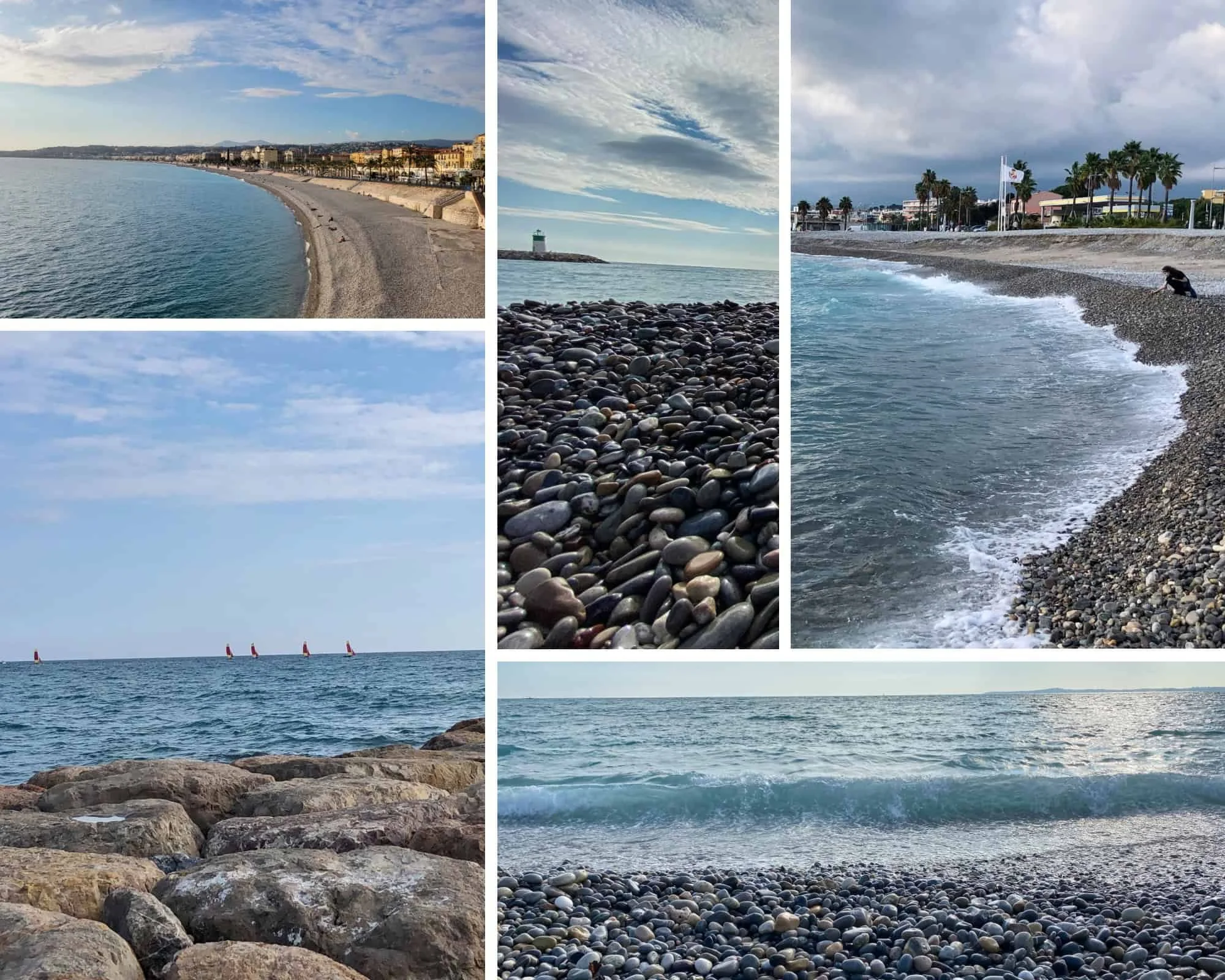
The pebbly beaches of Nice are amazing to see & even more incredible to listen to as the waves crash along the shore.
What We Wish We Had Known About Nice's History Before We Arrived
We will be honest: we did not fully appreciate the depth of Nice's history while we were there. We visited a few sites, we read some plaques, and we moved on. It was only while researching and writing this guide that the full timeline came into focus. We found ourselves wishing we had done that research before we arrived, not after.
If you are traveling with tweens or teenagers, do not make the same mistake we did. Nice rewards preparation in a way that most beach destinations do not. An hour spent reading about the city's history before you go transforms what your kids see from attractive old buildings into a layered story they can actually follow on the ground.
The timeline worth knowing: The Greeks named the city Nikaia after Nike, the goddess of victory. The Romans followed. A roughly 500-year tug-of-war between France and Sardinia ended when France permanently annexed Nice in 1860. During WWII, Nice first served as a refuge for Jewish families fleeing Nazi persecution before falling under German occupation in 1943, and was liberated in August 1944.
The city has been continuously inhabited for roughly 400,000 years! You can stand inside the Musée de Préhistoire de Terra Amata, built on the exact archaeological site where traces of huts constructed by Homo erectus ancestors were discovered.
Note: The Terra Amata Prehistory Museum is currently closed for renovations (accessibility). It will reopen to visitors in autumn 2026.
For teenagers who have studied European history or WWII, this context transforms what might otherwise look like a pretty seaside city into something far more layered. For grandparents who lived closer to that era, it carries a different weight entirely. That generational difference in how a place lands is one of the things that makes multigenerational travel so worthwhile.
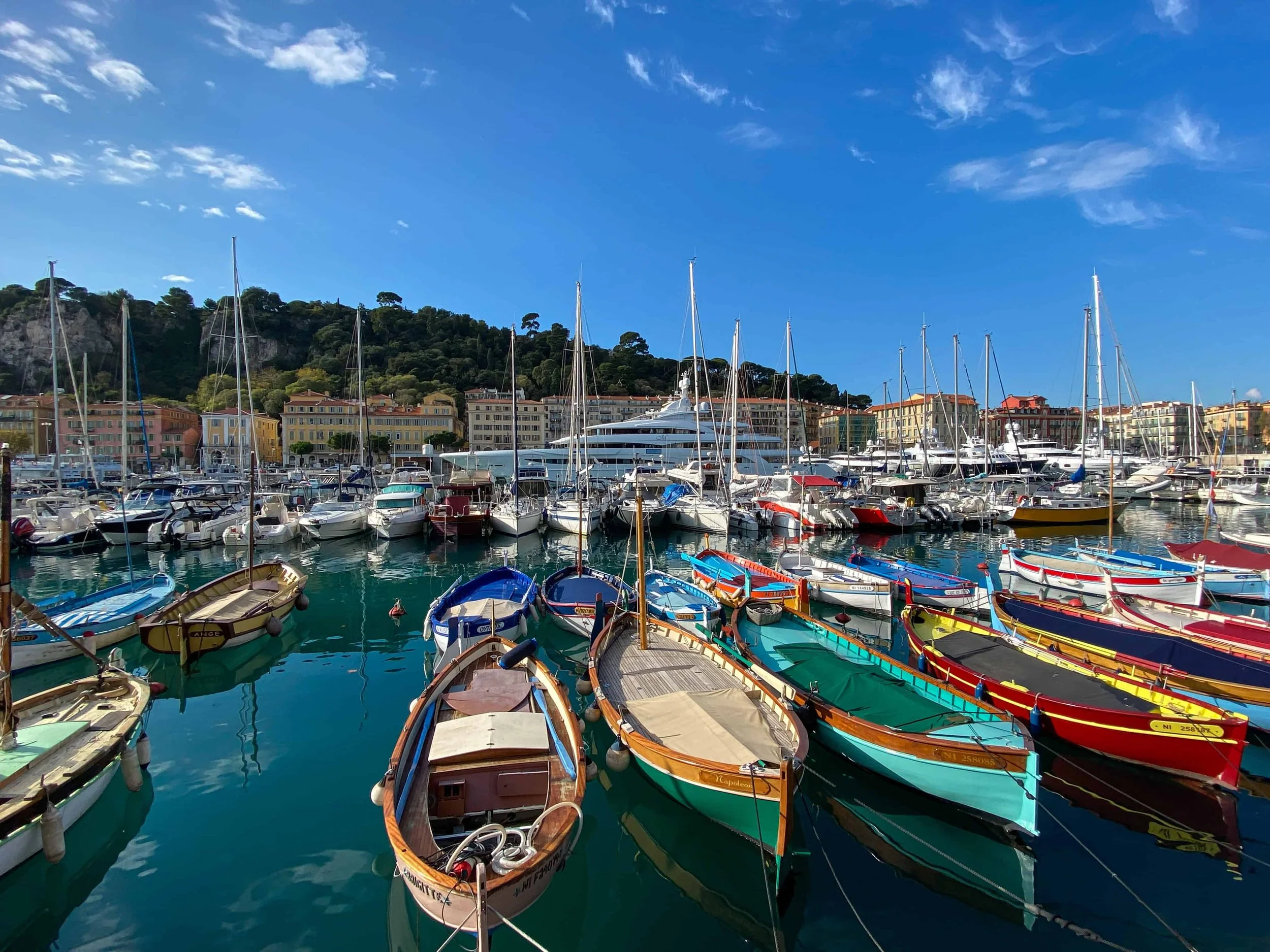
Colorful fishing boats that share space at Port Lympia (Old Port of Nice) with multi-million dollar yachts.
Getting to Nice: By Air, By Train, or By Road Trip
Nice sits in the far southeast of France between the Mediterranean Sea and the Alps. It is France's fifth-largest city, roughly 20 kilometers from Monaco and 30 kilometers from the Italian border. As we drove the coastal approach into the city for the first time, we were in awe of the sea on one side and the mountains behind! It is one of those moments that makes you understand immediately why people love visiting Nice.
Nice Côte d'Azur Airport is the third busiest airport in France, with direct routes to more than 115 destinations across 40+ countries. For most families coming from outside Europe, flying directly into Nice is the easiest option.
If you're already in France, the SNCF train network connects Nice to Paris, Lyon, and Marseille. The coastal train from Nice also runs directly to Monaco and along the Italian Riviera, one of the most scenic rail routes in Europe and worth doing for its own sake.
How We Got There
We rented a car in Lyon, France, for 28 days and drove to Nice. Our route took us east to Saint-Gervais-les-Bains and Chamonix first. We then drove southwest to Annecy, Avignon, Nîmes, and then Carcassonne. Finally, we turned east to Sète, Aix-en-Provence, and the coastal highway to Nice. Nice was our final destination before returning north to Lyon to drop the car.
We drove into Nice and found public parking without difficulty, easier than we expected, given the city's reputation. Once parked, we left the car and walked everywhere for the duration of our stay. The tramway covered anything beyond walking distance. For the regional day trips we took from Nice, including the drive to Monaco, having the car was nice to have, but not essential.
If you are building a broader France itinerary, driving into Nice is a realistic option. If Nice is your only destination, flying or taking the train and skipping the rental entirely is the simpler call.
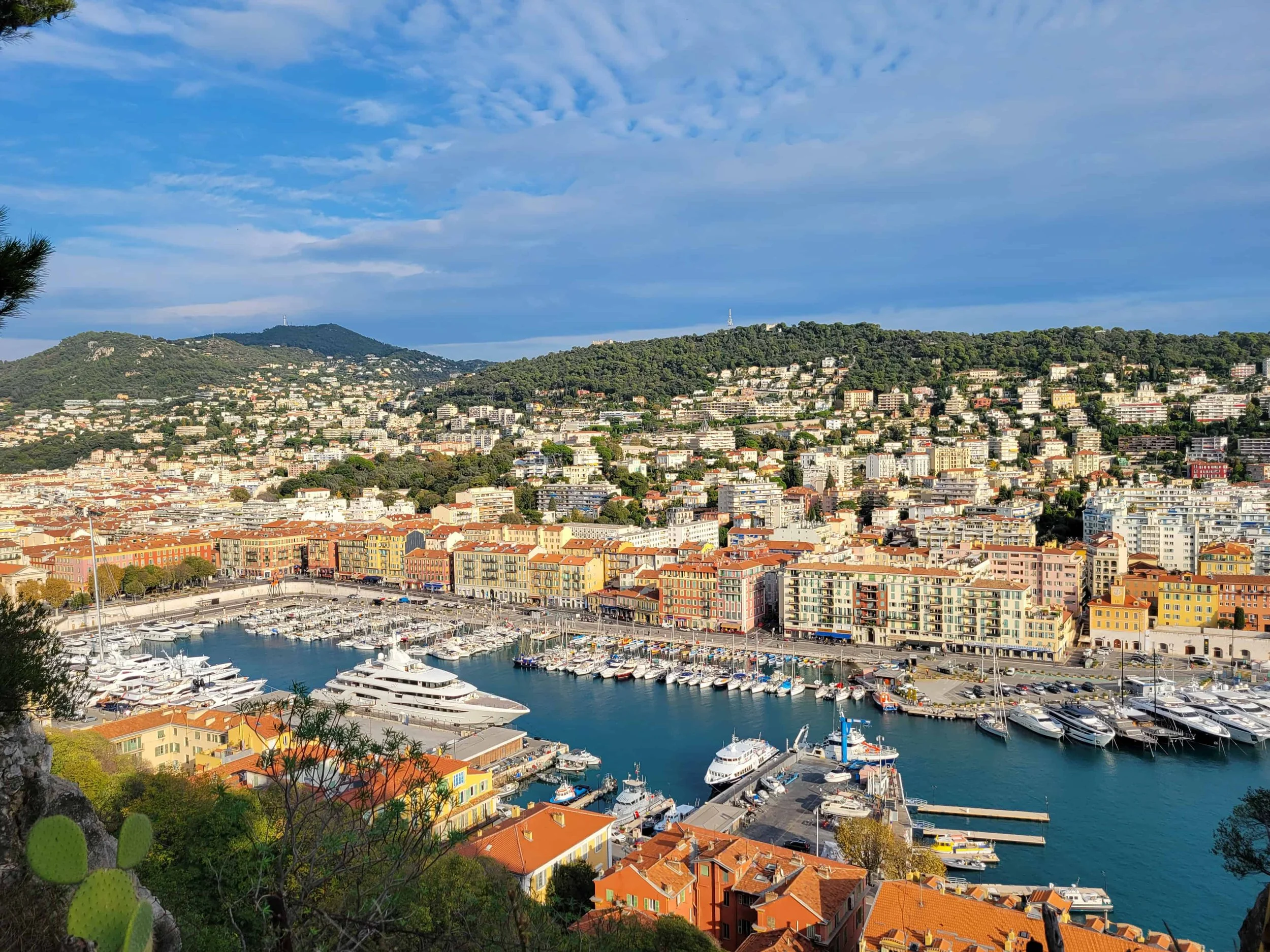
View of Port Lympia from atop Castle Hill.
Getting Around Nice: What We Actually Used
The short answer for multigenerational groups: plan around walking and the tramway, with the free Castle Hill elevator as a non-negotiable for anyone in the group who can't manage 300 steps.
The Tramway: Lines 1 and 2 cover the destinations most families actually visit. A single ride costs around €1.50; a 10-ride pass costs about €10. If you have independent teens who are travel pros, they may be able to manage their own way around town on the tram. Obviously, this choice depends on your comfort level and your teen.
Walking: We walked far more than we expected to. The flat streets and Promenade made this possible even on long days; we regularly logged more than 8 kilometers without anyone complaining. Comfortable shoes are not optional. This is a walking city.
Uber & Taxis: Uber operates in Nice and is useful for airport transfers or getting back from a long day when nobody wants to walk another kilometer. Taxis are available too, but Uber shows you the price upfront, which is always the smarter option when you're managing group costs. We never used a traditional taxi.
Where to Stay in Nice with a Family Group: Why We Skip Hotels Every Time
In our experience, hotels are rarely the right choice for families with more than three people or multigenerational groups. Most European hotel rooms max out at three guests, which means splitting the group across two or more rooms, losing the shared space that makes traveling together enjoyable, and spending considerably more than a comparable apartment. We have tried the two-room hotel approach on other trips. We do not recommend it.
Apartments and vacation rentals are the consistent answer. A multi-bedroom apartment gives everyone their own space, plus a kitchen and a living room, with enough square footage that nobody feels like they're on top of each other. The total cost is almost always less than the cost of two hotel rooms, and the experience is not comparable.
What We Chose & Why
We stayed in a beautiful three-bedroom penthouse in nearby Saint-Laurent-du-Var, a small commune just west of Nice on the coastal road. The terrace had unobstructed views of the Mediterranean sea, Nice, and on clear days, Antibes in the other direction.
We loved staring at the Mediterranean Sea while sipping coffee in the morning or having our evening meal. While our accommodation was billed as the “penthouse,” it was really just the top floor of our building, not an extravagant splurge. It was cozy and fit the 5 of us perfectly. We extended our stay to nearly double our original booking because we enjoyed the location, the comfortable apartment, and of course, the view!
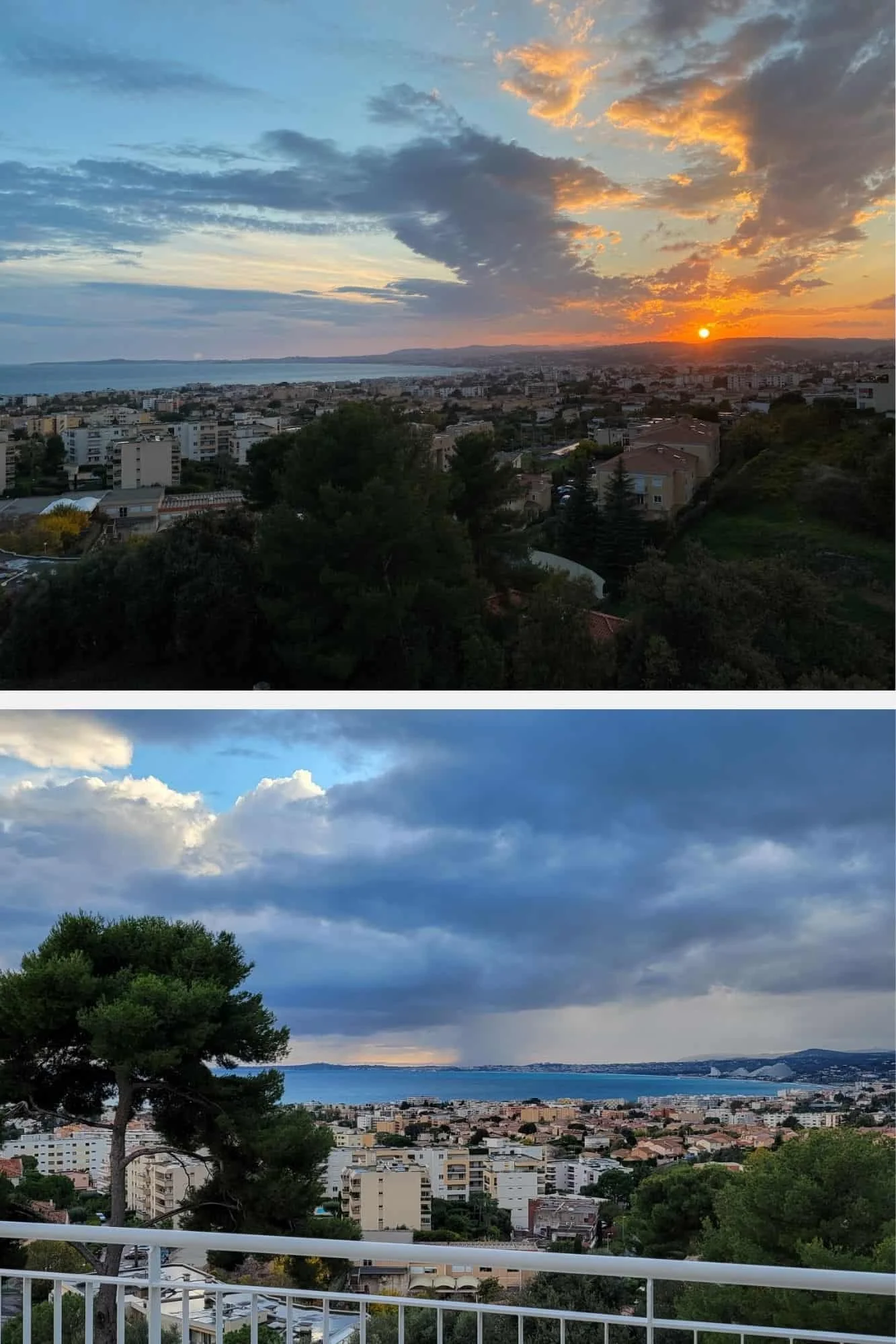
The stunning view of Nice, & neighboring Antibes in the distance, from our Airbnb in Saint-Laurent-du-Var.
The tradeoff is straightforward:
Staying closer to Place Masséna or the Promenade puts you within walking distance of everything but costs more.
Staying slightly outside the city center (as we did in Saint-Laurent-du-Var) costs less, gives you more space, and requires a short drive or Uber into the city, unless you’re willing to make the trek on foot.
For us, the extra 10 minutes each way was not a fair trade for the space and the views. For multigenerational groups that need their own space and everyone benefits from a full kitchen, the slightly-outside option often wins.
Insider Tip: When searching for an apartment, filter for: full kitchen, washing machine, elevator access, Wi-Fi, and outdoor space if your budget allows. Those five filters eliminate most of the options that look good in photos and disappoint in person.
What to See & Do in Nice: The Best Experiences are Free
The best news about sightseeing in Nice is that nearly all of the city's most iconic experiences are free. Here is an overview of what is actually worth your time.
Check out our full list of 17 Free Things to Do in Nice, France with Kids (2026 Guide)
Promenade des Anglais
Built in 1822 by English aristocrats who wanted an easier walking path along the rocky coastline, the Promenade des Anglais stretches seven kilometers along the Mediterranean. Nicknamed "the Prom" by locals.
We walked it multiple times, morning and night, and the two experiences are completely different. In the morning, the light is soft, and the crowds have not built yet. At night, the breeze coming off the sea changes the entire atmosphere of the city.
On one of our evenings, we walked down from the Promenade to the beach and sat at the water's edge in the dark, listening to the waves pull back over the pebbles. Nobody suggested it. Nobody planned it. We just stayed.
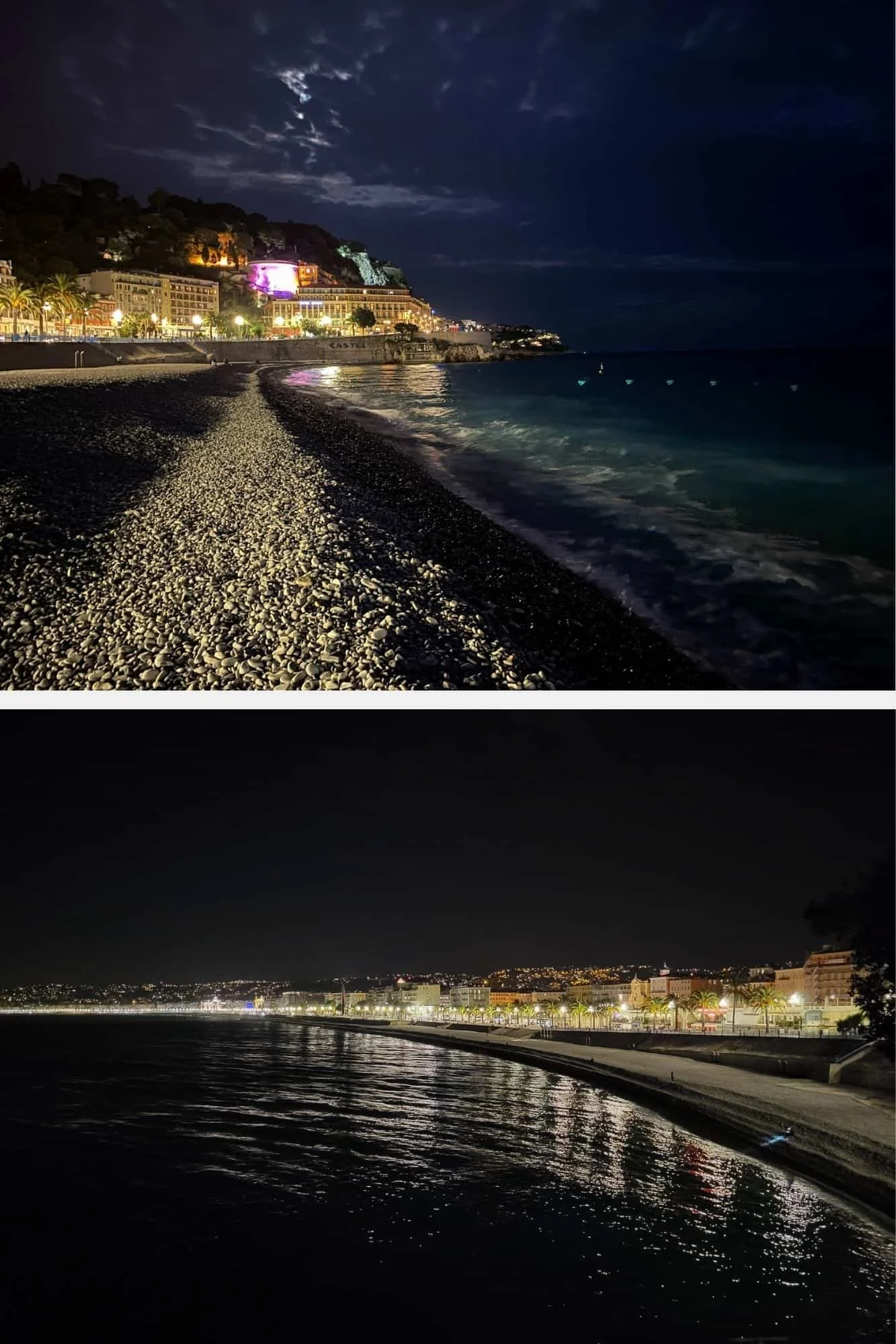
Nighttime views of Castel Beach & the Mediterranean coastline in Nice.
That sound, waves over smooth stones, is nothing like any ocean soundtrack you have heard. It is worth going, specifically to hear it after dark.
For multigenerational groups, this is the great equalizer. It's completely flat, well-maintained, and runs the full length of the seafront. Grandparents can walk as much or as little as they want and find a bench with a view. Teens can move at their own pace. And everyone has a great view of the Mediterranean!
Our Verdict: Walk it on your first morning to orient yourself. Walk it again at night. Sit on the beach after dark at least once. (That last part is not optional.)
Colline du Château (Castle Hill)
At 92 meters above the sea, Castle Hill delivers the best free view in Nice. The panorama takes in the entire bay, the port, the Old Town rooftops, and the Alps in the distance. There's a waterfall, a playground, and the ruins of a castle demolished at Louis XIV's request in 1706.
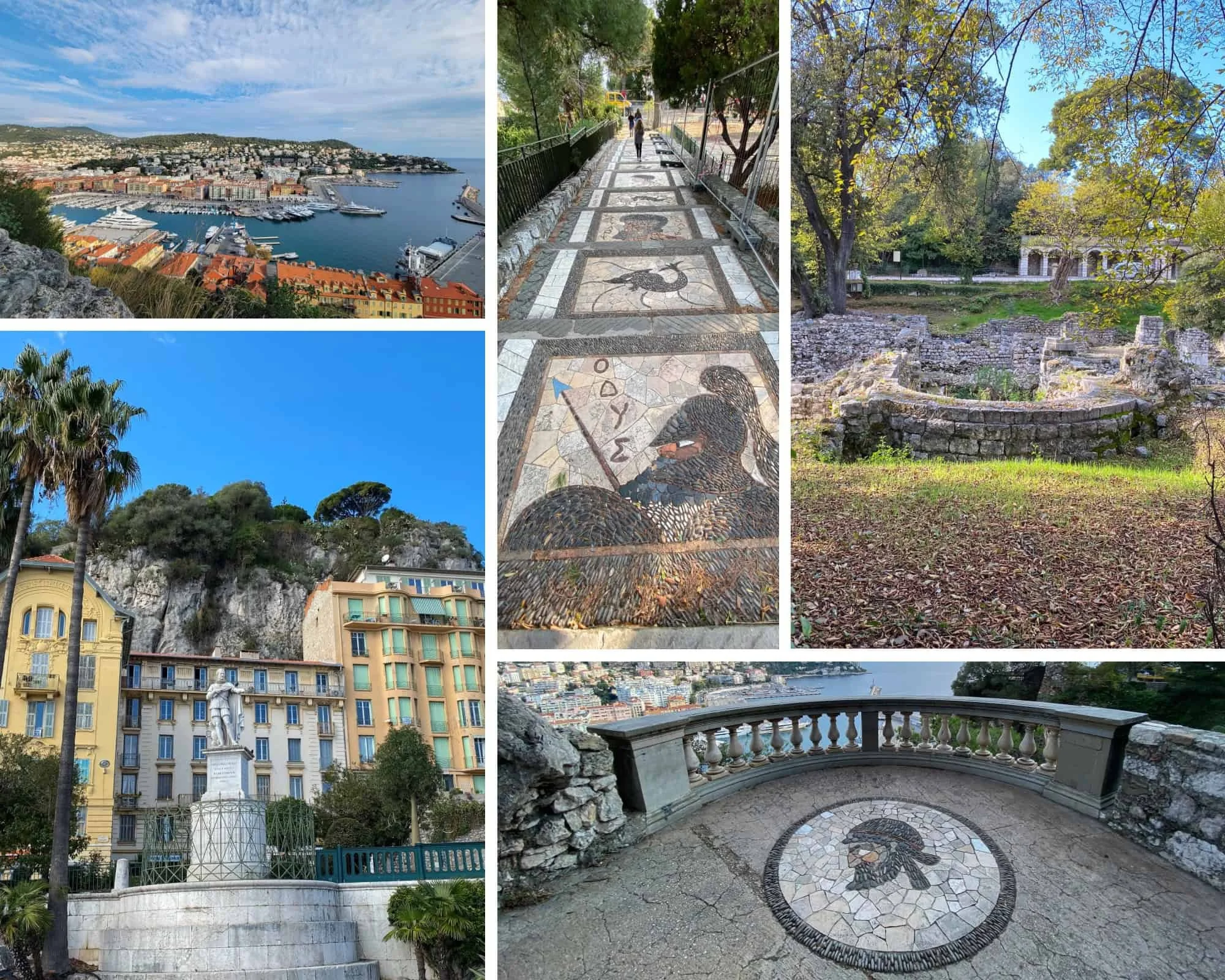
Just a glimpse at some of the intricate details & stunning views that can be found at Castle Hill in Nice.
Here is what the guidebooks do not tell you: There is more than one way up, and we found that the hard way. We entered from the opposite side of the hill, a steep, 300-step staircase from the port side, winding up to Castle Hill. By the time we reached the top, we were genuinely winded. Our teenagers thought it was funny. The adults were less certain.
What we found at the top made it completely worth it. The views are extraordinary! Nice is laid out below you in every direction, the Mediterranean beyond it, the Alps behind. We spent a long time up there taking photos and did not want to leave.
On the way down, we discovered the free elevator on the main seafront side, located across from the Hôtel Suisse. It would have saved us significant effort on the way up. We are choosing to frame this as a discovery rather than a navigational failure.
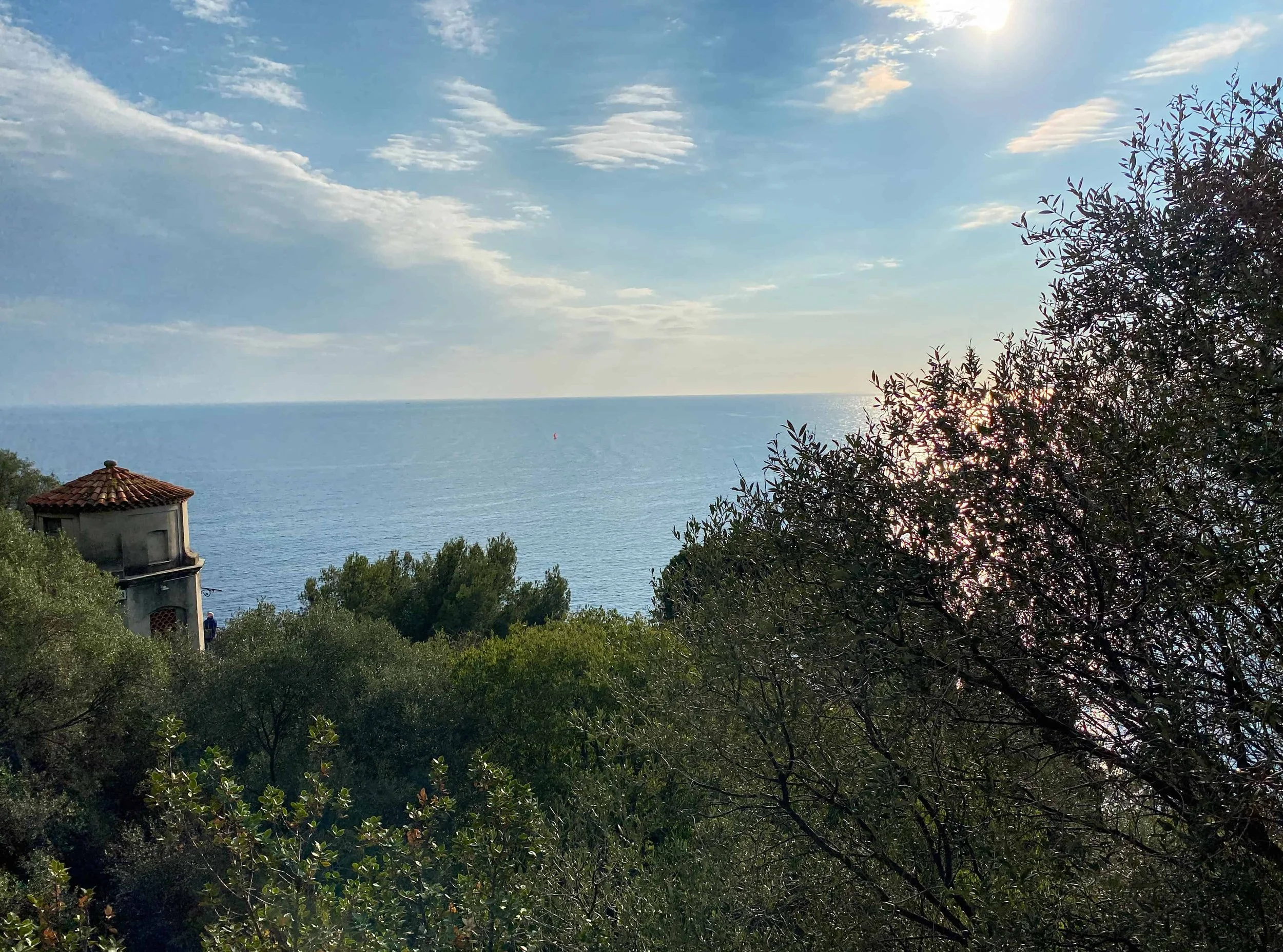
View from Castle Hill, looking toward the elevator & the Mediterranean Sea.
Our Verdict: Go! Take the free elevator up from the main seafront side. If you want the athletic version, the staircase from the port side is the intentionally challenging route. The steep winding path from the opposite side is not signposted as the scenic option. Learn from our experience.
The Museums of Nice: The Best Family Deal in Europe
We did not visit any of Nice's museums during our stay. We enjoyed the Promenade, Castle Hill, Old Town, and day trips, which filled our days completely. That is one of our genuine regrets from the trip, and the main reason we recommend allowing more days than you think you need.
What we can tell you with certainty is that all ten of Nice's city museums offer free admission to anyone under 18. Which makes it one of the best deals in European family travel.
For adults and grandparents, a four-day pass covering all ten museums is available on the official Nice museum ticketing site. For a multigenerational group traveling with teenagers, this is one of the most significant budget advantages available in any major European city.
Based on research and consistent traveler recommendations for multigenerational groups specifically, these are the museums we have on our list for the next visit:
Musée de Préhistoire de Terra Amata is built on the actual site where traces of 400,000-year-old human habitation were found. Given what we learned about Nice's history while writing this guide, this is our first stop next time.
Musée Matisse houses Henri Matisse's work in a Genoese villa dating from 1695. Matisse made Nice his home from 1917 until his death in 1954.
Palais Lascaris is a baroque palace from the early 1600s with the second-largest collection of ancient musical instruments in France.
MAMAC is currently closed for major renovations with its reopening planned for sometime in 2028.
Musée Masséna covers the history of Nice in a preserved neoclassical villa with original 19th-century furnishings and paintings of Napoleon Bonaparte
Have you visited any of Nice's museums with a multigenerational group? We are actively building out this section and want to hear which ones delivered for mixed-age groups. Drop your experience in the comments.
Where to Eat in Nice: Local Staples, Hidden Gems, & What to Skip
Nice's food works well for multigenerational groups because the local specialties are unfussy, affordable, and delicious. That was our biggest surprise after 11 days; we expected the French Riviera's reputation to translate into expensive meals and precious dining rooms. We found just the opposite. The things to know before you arrive:
Socca is the one non-negotiable. A thin, savory chickpea pancake cooked in a wood-fired oven and served hot with black pepper, it's inexpensive, filling, and specific to Nice. On one of our evenings in Old Town, a vendor threw in some Socca free with our pizza order. It was the best accidental discovery of the trip! It was delicious and very shareable.
Pissaladière (a savory tart with caramelized onions, olives, and anchovies) and pan bagnat (essentially a Niçoise salad pressed into bread) round out the local staples worth seeking out.
None of these requires a sit-down restaurant or a reservation. They are market and street foods, which are exactly right for a multigenerational group with different appetites and different ideas about how long lunch should take.
On cooking at the apartment: Several evenings, we bought groceries and cooked at the penthouse instead of going out. For a multigenerational group managing different schedules, different appetites, and a budget that needed breathing room, having a full kitchen was one of the strongest arguments for choosing an apartment over a hotel. A supermarket run and a dinner on a penthouse terrace with a Mediterranean view cost a fraction of any restaurant in the city and remain among our clearest memories from the trip.
On dining out: During one of our evenings, we had dinner at a seafront restaurant. It was casual and relaxed, with good food at a price that did not match the setting's glamorous reputation. That gap between what we expected to pay and what we actually paid for a quality meal in Nice surprised us consistently across 11 days.
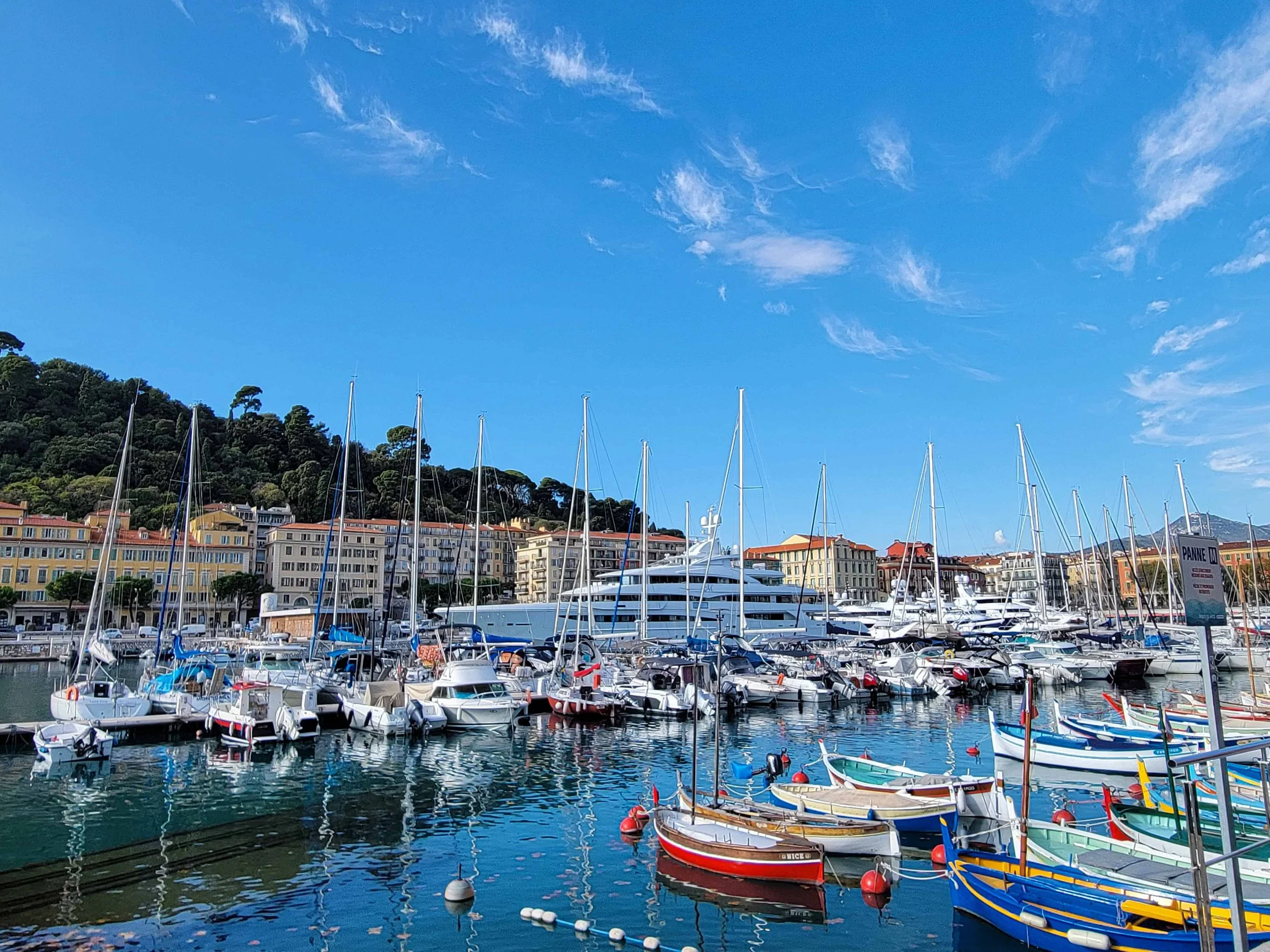
View of colorful boats & a mega yacht in Port Lympia.
Nice Restaurants Worth Adding to Your List
We only scratched the surface of Nice's food scene during our stay. Based on consistently strong local reviews and recommendations from travelers we trust, these are worth adding to your list, though we cannot speak to them from personal experience:
Chez Pipo (13 Rue Bavastro) – The most beloved socca spot in the city. Casual, affordable, and widely recommended as the right introduction to Nice's food culture.
Lou Pilha Leva (10 Rue du Collet) – Socca, pissaladière, and local specialties at outdoor tables in Old Town. Consistently recommended for groups because everyone can order differently and share the table.
Fenocchio (2 Place Rossetti) – The legendary gelato institution in Old Town with 96+ original flavors. Every Nice guide we trust recommends going more than once.
Have a Nice restaurant recommendation from personal experience? We want to hear from families who have visited recently. Drop it in the comments.
Nice Restaurants to Skip
The restaurants lining the Promenade des Anglais and the perimeter of Place Masséna follow a consistent pattern: prominent locations, large tourist-facing terraces, menus printed in four languages, and food that does not justify the price.
Local Nice residents and long-term visitors are consistent on this across every travel forum we checked. The views are real. The value is not. Any restaurant with a laminated photo menu facing the seafront is a reliable signal to keep walking and find something two streets back.
This is a consistent finding across TripAdvisor, Rick Steves forums, and local Nice travel communities, not just our observation. Always check local review sites before eating at any restaurant.
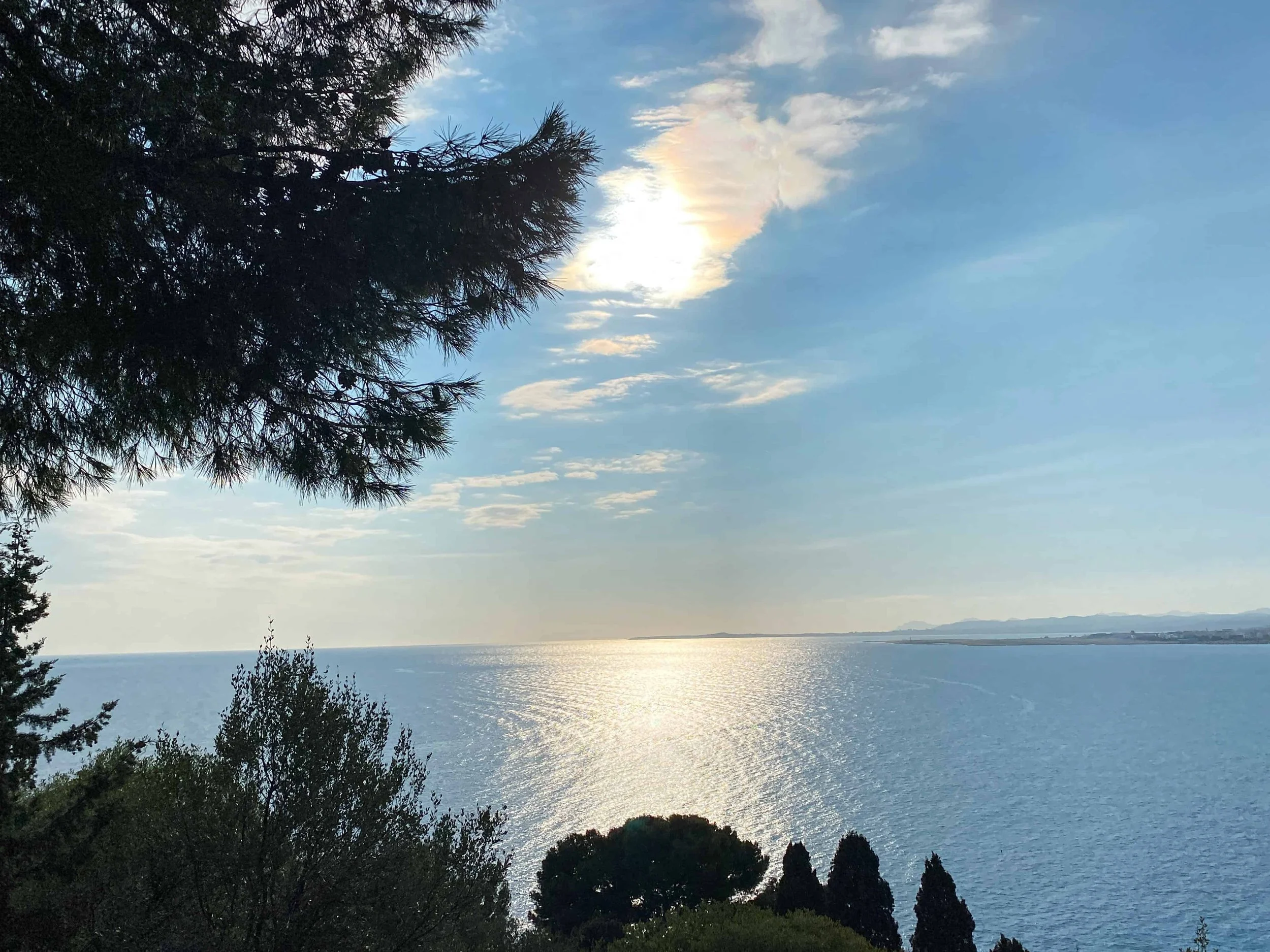
Overlooking the Mediterranean Sea from Castle Hill.
For Budget Meals
Based on our experience with local markets in other French towns, the Cours Saleya market (Tuesday through Sunday mornings) is widely recommended for picking up fresh supplies for a picnic at Promenade du Paillon or Castle Hill. This is one of the best ways to feed a multigenerational group without anyone compromising on what they want.
Insider Tip: Like much of France, Nice restaurants don't typically open for dinner until 7:30 pm. For multigenerational groups where grandparents keep earlier hours, make lunch the main meal of the day, and keep the evening light. Pack afternoon snacks to bridge the gap.
Having a kitchen in your apartment makes this significantly easier. A light dinner at home on the terrace solves the timing problem entirely.
Nice Events Worth Building Your Trip Around: What to Know Before You Book
Nice's event calendar runs year-round and affects everything from accommodation pricing to crowd levels. Here is what your family needs to know before choosing travel dates.
We did not attend any of these events personally. Our November visit predated the opening of the Christmas Village and missed the other festivals entirely. What follows is based on research and consistent traveler accounts, framed honestly as such.
Carnaval de Nice runs each February, drawing over 1 million visitors and spanning more than 140 years of tradition. It opens in Masséna Square with the arrival of the enormous King of Carnival puppet and runs for multiple days of parades, light shows, and music. This is the kind of multigenerational spectacle that lands differently at every age and generates shared memories that last. One practical note: Accommodation prices rise significantly during Carnaval week. Book well in advance if your dates overlap. Full details at nicecarnaval.com.
Nice Jazz Festival runs each August across two stages with 24 concerts over four days. The inaugural festival in 1948 featured Louis Armstrong. For multigenerational groups where grandparents and young adults might actually agree on something for once, jazz is a strong candidate. Full details at nicejazzfest.fr.
Nice Christmas Village runs from late November through January 1st with 60 mountain chalets, an ice rink, a Ferris wheel, and Christmas lights along the entire Promenade des Anglais. It's the largest Christmas market in the South of France. Our November visit ended just before the opening, something we genuinely regret. If your dates extend into late November or December, this is worth building your itinerary around.
Cannes Film Festival takes place in May in Cannes, not Nice, but its impact on the entire Riviera is significant enough to include a mention here. Accommodations fill up, and prices rise across the region. If your dates overlap, book well in advance.
Best Time to Visit Nice with a Multigenerational Group
Spring (April to June) and fall (September to November) are the sweet spots. Pleasant weather, manageable crowds, better accommodation rates, and enough going on in the city that it doesn't feel empty.
We visited in November and found it comfortable in lightweight pants and long sleeves during the day, with a light jacket in the evenings. The crowd levels were low. We walked Old Town with plenty of space, restaurants were not packed, and we moved through shops without competing for floor space with other tourists. For a group our size, that breathing room changed the quality of every day.
For multigenerational groups where grandparents may be temperature-sensitive or prefer a less chaotic pace, the shoulder seasons almost always deliver a better experience.
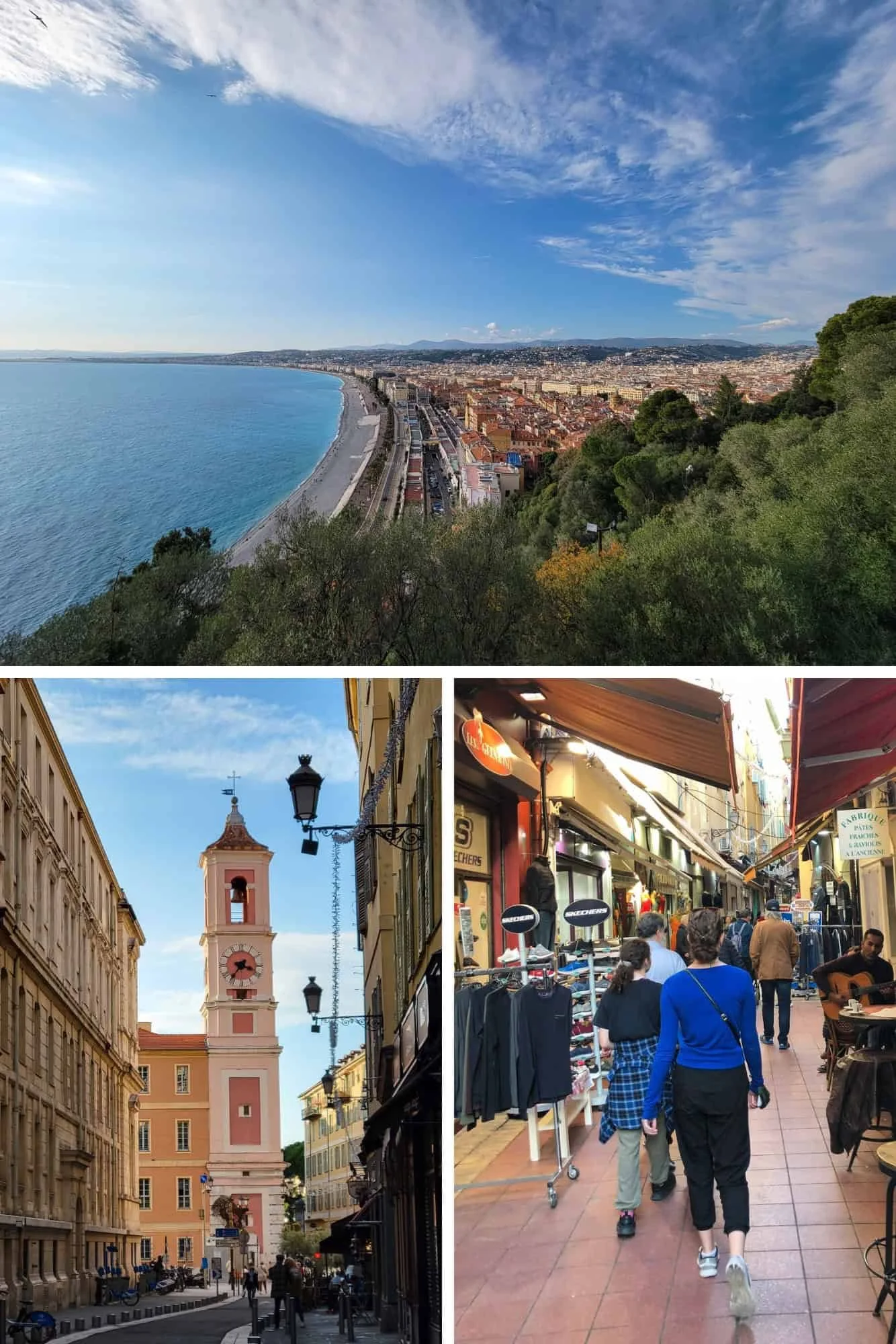
We had an amazing time exploring Vieux Nice in the cool fall temperatures!
July and August are worth avoiding for multigenerational groups specifically. The heat is significant, the crowds are at their peak, and accommodation costs are at their highest. For anyone in your group who is temperature-sensitive, grandparents especially, summer in Nice trades the relaxed pace that makes the city work for a more congested, more expensive version of the same place.
May overlaps with the Cannes Film Festival and its regional price surge. If you have any flexibility, shift to April or June.
Our Verdict: November was the right call for our group. If you can go in shoulder season, do so. The city is the same. Everything around it is easier.
Freqently Asked Questions - Nice with Kids
Is Nice, France a good destination for families with kids of different ages?
Yes, and this is what surprised us most after 11 days there. Nice is one of the few European cities that genuinely works for families spanning multiple ages at the same time, without anyone compromising. The Promenade des Anglais is completely flat and runs seven kilometers along the Mediterranean, which means grandparents or younger kids can walk at their own pace while teenagers push further.
Castle Hill has a free elevator and a playground at the top. The tramway has level boarding. The museums are free for anyone under 18. And the city is compact enough that different generations can split up and reconnect easily. We traveled with a college-age daughter, a teen, and a tween, all five of us were consistently happy at the same time, which does not happen everywhere.
Is Nice, France safe for kids and families?
Nice is generally safe for families by European city standards. The main tourist areas, the Promenade des Anglais, Old Town, Place Masséna, and Castle Hill, are well-maintained, well-lit, and regularly busy with local families as well as tourists. Standard travel precautions apply: watch bags in crowded market areas and in Old Town, where pickpocketing is the primary concern.
We walked extensively throughout the city with our three daughters across 11 days, including at night along the Promenade, and never felt unsafe. The biggest practical concern for families is the cobblestone streets in Old Town, which require sturdy footwear rather than any safety consideration.
What are the best free things to do in Nice with kids?
Nearly all of the best experiences in Nice are free. The Promenade des Anglais, seven kilometers of flat Mediterranean seafront, costs nothing and works for every age. Castle Hill delivers the best view in the city via a free elevator and has a playground at the top.
The public beaches are free, though pebbled rather than sandy. All ten of Nice's city museums offer free admission for anyone under 18, which makes the museum pass for adults the main cost rather than a per-child entry. Place Masséna and Old Town are both free to explore. We spent full days in Nice, genuinely rich days with real cultural depth, for almost nothing once we understood where the free experiences were.
How many days do you need in Nice with kids?
More than you think. We originally planned fewer days and extended our stay to nearly double. Three days is enough to cover the main sights, the Promenade, Castle Hill, Old Town, and Place Masséna. Five days allows you to add at least one day trip, spend proper time in the museums, and move at a pace that does not feel rushed for a multigenerational group.
Seven days or more is where Nice really opens up, day trips to Monaco, Antibes, Villefranche-sur-Mer, and the surrounding region become realistic without sacrificing time in the city itself. Our honest recommendation: allow at least five days, and build in buffer. You will understand why when you get there.
Are the beaches in Nice good for kids and families?
Yes, with one important expectation to set in advance: Nice's beaches are pebbled, not sandy. Smooth flat stones rather than sand. There is no sandcastle building, and walking barefoot from towel to water is uncomfortable without water shoes or sandals that can get wet. Once those are sorted, the swimming is excellent, the Mediterranean water is calm, clear, and warm well into October.
The beaches are public and free. For families who specifically need sand, Villefranche-sur-Mer is a 15-minute bus ride east of Nice and has a free public sandy beach. One of our clearest memories from the entire trip is sitting at the water's edge after dark, listening to the sound the waves made pulling back over the pebbles, it is nothing like any ocean soundtrack you have heard, and worth experiencing at least once.
Why Nice Stays With You
Most cities give you a highlight or two. A great meal. A view worth the climb. Nice gave us all of that and then kept going.
We walked the Promenade in the morning, quietly, and again at night when the sea breeze changed everything. We climbed Castle Hill the hard way by accident and stayed at the top longer than we intended. We wandered Old Town without a plan.
We had coffee every morning on a penthouse terrace with the Mediterranean and Antibes in the distance, and we extended our stay because leaving felt like the wrong decision.
None of those moments were planned. All of them are what we remember.
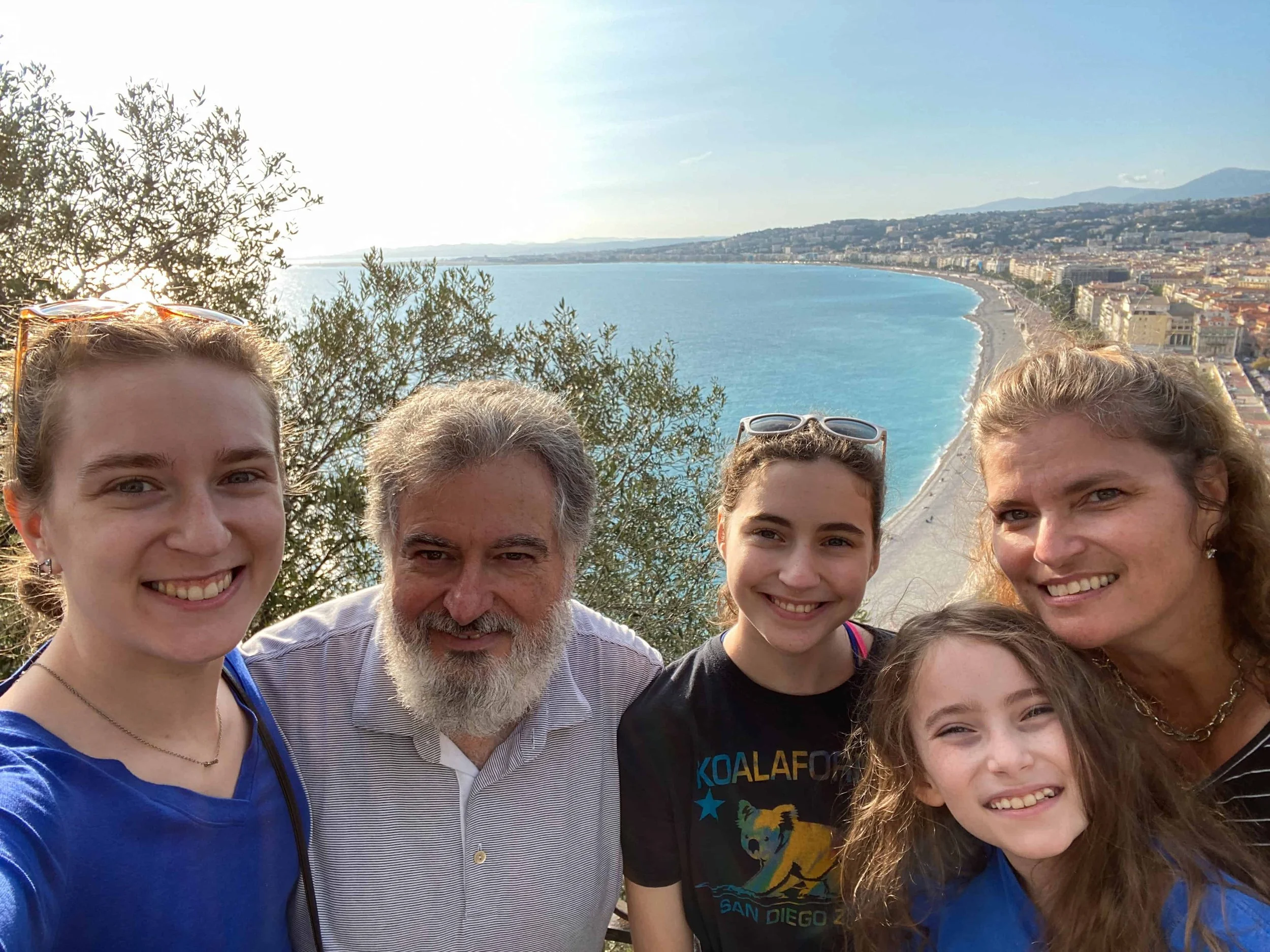
Family selfie from atop Castle Hill overlooking the coastline of Nice.
Nice is the kind of place that works when you stop trying to make it work and just let it. Walk the Promenade. Climb the hill. Eat the socca. Sit on the beach after dark and listen to the waves crash over the pebbles.
Everyone in the group was happy at the same time, which anyone who has ever traveled with multiple generations knows is not something you take for granted.
Allow more days than you think you need. You'll understand why when you get there.
One More Thing Before You Book
Eleven days in Nice taught us a lot. One of the things it reinforced, something we learned the hard way earlier in our travels, is that travel insurance is worth thinking about before you need it, not after.
Most families either skip travel insurance entirely or grab whatever their credit card offers and hope for the best. We did both of those things at different points. Neither worked out the way we expected when we actually needed to make a claim.
For a trip to Nice, a week or two in France with family, potentially including a day trip to Monaco or a drive along the Italian Riviera, the things worth covering are medical emergencies, trip interruption, and the unexpected costs that come with traveling as a group. A single medical incident in Europe without the right coverage can cost more than the entire trip.
SafetyWing is what we use for our family, and it is what we recommend to families planning trips like this one. The coverage travels with you across borders automatically, which matters if your Nice trip connects to other destinations. And the pricing is straightforward, use the calculator below to see exactly what coverage costs for your specific travel dates and family size. It takes about 30 seconds.
"We learned the hard way — a $3,000 medical bill from a trip we thought we were covered for taught us that not all travel insurance is built for families who actually travel. SafetyWing is what we switched to, and 24 months into full-time travel, it's the one purchase we've never questioned."
See exactly what family coverage costs for your trip:
Quick note: We are an affiliate partner with SafetyWing, meaning we earn a small commission if you book through them — at no extra cost to you. We link to SafetyWing because it's what we use for Travel & Medical Insurance. We only recommend what we personally use and trust.
Planning a trip that works for everyone in your group is harder than it sounds.
Every Sunday we send one email to families navigating exactly that, multigenerational trips with teens, tweens, young adults, and grandparents who all have different definitions of a good day.
Real budgets. Honest verdicts. Destinations we have actually tested with our own five-person, three-generation family. Nothing we have not personally done.
About the Author
Colleen is a Gen X mom, full-time traveler, and the voice behind Uncommon Family Adventures. She travels the world with her husband Kevin, their adult daughter, and their teen daughters, a group that spans enough generations to need experiences that genuinely work for everyone.
Her family spent nearly two weeks on the French Riviera, from a penthouse terrace in Saint-Laurent-du-Var and the cobblestones of Old Town Nice to the principality of Monaco, which means every recommendation in this guide comes from real days on the ground with a real multigenerational group.
