
How to Avoid These Family Travel Budget Mistakes on Your Next Trip
“You don’t have to be rich to travel well - but you do need to be smart.”

A family photo in front of Wat Phra Kaew in Bangkok, Thailand.
This article was updated on February 27th, 2026
This post contains affiliate links, which means if you buy something following a link on this page, we may get a small commission at no extra cost to you. Thank you for supporting our blog! - Colleen & Kevin
On a trip to Kuala Lumpur, Malaysia, I sat in a specialist's office for the third time in a week, watching a bill climb past $3,000. Scans, consultations, and medication. We had travel insurance. I wasn't worried.
Then they denied the claim.
The policy was riddled with fine print I hadn't read carefully enough. When I filed, they found a loophole and used it. The $3,000 came straight out of our travel fund, and it hurt in a way that took months to recover from, not just financially, but in how we thought about the decisions we'd made leading up to that moment. I had done research. I had bought coverage. I had still made an expensive mistake.
That's what this post is about.
Not the dramatic stuff, the missed flights, the lost luggage, the logistical chaos that makes for good stories afterward. We cover those in our guide to common family travel mistakes. This post is about the quieter financial mistakes. The ones that don't announce themselves until you're looking at a bill, a booking confirmation, or a credit card statement and wondering how a trip you planned carefully ended up costing this much!
The 10 Family Travel Budget Mistakes That Have Cost Us Real Money
Between full-time travel across 15+ countries with our family, we've made most of these mistakes ourselves. Some we caught early. Some cost us real money before we figured out what we were doing wrong. Every single one of them is preventable once you know how to look for it.
Eating Out for Every Meal
Restaurant meals can quietly consume 15–20% of your total travel budget, and the damage compounds fast when you're multiplying every bill across a family. A family eating out three times a day can spend $500– $700 per week on food alone. Buying groceries for those same meals typically runs $150–200.
According to Luxury Link’s January 2026 analysis of 2025 family vacation costs across 100 U.S. cities, average daily meal expenses for a family of four rose 28.2% between 2019 and 2025, the steepest increase among all major vacation categories and more than double the rise in lodging or airfare.
Back in my corporate days, a week-long family vacation was the standard. And without fail, every single trip, food blew the budget. Not by a little. By a lot. We were eating out two to three times a day, like it was part of the vacation itinerary, and when I'd sit down afterward and run the actual numbers against what we'd planned to spend, the food line was always the embarrassing one.
We eventually figured out a system that still works for us today. One nice dinner out, maybe two if the destination calls for it. Everything else? Breakfast and lunch items we pick up for the room, and a local sub or pizza delivery to eat on the hotel property. Nobody feels deprived. The food is still good. And we stop dreading the post-trip budget review.
That habit followed us into full-time travel. Turns out the math gets even more interesting when you're doing it every week instead of once a year.
The food fix can be straightforward: book accommodations with kitchens. We now do this on nearly every stop. Even handling breakfast and one other meal per day in-house makes a meaningful difference. We prioritize finding the nearest market within the first 24 hours of arriving in a new place. Markets are also genuinely enjoyable to explore together, and in places like Southeast Asia and southern Europe, you eat better food at a fraction of restaurant prices.
This is also one of the biggest reasons we rely on house-sitting as an accommodation strategy, which we explore in depth in our dedicated post on affordable family travel with TrustedHousesitters. A full kitchen is always part of the deal.
Traveling Only During Peak Seasons
The first time we priced out a summer trip to Williamsburg, Virginia, I ran the numbers three times because I didn't believe them. Same itinerary, same hotels, same parks, but if we visit just six weeks earlier, it would be almost half the cost. That's when shoulder season stopped being a vague concept and became a firm part of how we plan every trip. Shoulder-season travel typically delivers 20–40% savings on both flights and accommodations, often with fewer crowds and more authentic experiences, too.

A front view of the Governor’s Palace in Colonial Williamsburg.
Japan in November, Europe in late spring, Southeast Asia outside the holiday windows, these aren't just cheaper. They're genuinely better. Fewer crowds, more access, and locals who aren't exhausted by tourist season yet. We've experienced this firsthand, including our visit to Tokyo Disneyland in December, which gave us a far quieter, more affordable experience than a summer visit would have.
Our France strategy is another good example of this in practice. After a week in Paris, we moved on to spend a full month in Normandy, where costs dropped significantly, and the pace slowed down in all the right ways. We apply the same principle to expensive cities like London, where our budget guide to London with teens walks through exactly how we managed costs there for a multi-generational group.
Families with flexible schooling schedules have a real advantage here. If you're not locked into a traditional school calendar, mid-term travel is one of the most underused budget levers available.

Autumn was the perfect time to visit Colmar, France. We avoided the large crowds that visit during summer when kids are out of school & during winter when the Christmas Markets are in full swing.
Booking Flights & Hotels at the Last Minute
Procrastination is expensive. Flight and accommodation prices can jump 30–50% when you book close to your travel dates, particularly during school holidays and peak windows.
For domestic trips, booking 3–6 months in advance generally yields the best rates. For international travel, give yourself 6–12 months. Setting up price alerts through tools like Skyscanner or Google Flights means you catch deals as they appear rather than chasing them after they've already gone.
Mid-week flights and shoulder-season timing are two of the most reliable ways to reduce costs without compromising the quality of the experience. When you're traveling internationally as a family, the stakes on this one are especially high. Our 20 tips for international family travel cover the full flight planning process in greater depth.
Full transparency: we don't always follow this advice ourselves. When you travel full-time, your relationship with booking timelines changes completely. Our plans are fluid by design, which means we've booked flights a week out, reserved hotels the day of, and yes, I've literally been on the airport tarmac finalizing where we were staying that night. No regrets.
But that flexibility only works because travel is our life, not our vacation. When we had 1 week a year to get it right, we absolutely used the 3–6-month framework we're recommending here. The stakes are completely different. A last-minute fare that costs us an extra $200 is an inconvenience. The same situation for a family of four on their one big trip of the year is a budget wrecker.
So take the guideline for what it is, advice from the version of us that had exactly what you have right now: one week, one shot, and a budget that couldn't take a hit.
Leaving Credit Card Rewards on the Table
I resisted the credit card points game for longer than I should have. It felt complicated, and I was skeptical the math would ever produce something meaningful for a family our size. Then we booked five tickets from Paris to Kuala Lumpur on Singapore Airlines for under $500, not each, but total! That changed my position permanently.
Of everything on this list, this is the tip most families are least likely to consider.
We use cards like Chase Sapphire Preferred and Capital One Venture X to turn routine grocery runs and utility bills into travel points. We booked five tickets from Paris to Kuala Lumpur on Singapore Airlines using a combination of points and miles. That single redemption covered what would otherwise have been our biggest trip expense by a wide margin.
Family pooling in loyalty programs is worth understanding as well. Some programs allow you to combine points across household members for larger redemptions, which matters significantly when you're booking for five.
The key is paying your balance in full every month. Points only make financial sense when interest charges aren't eating into the value.
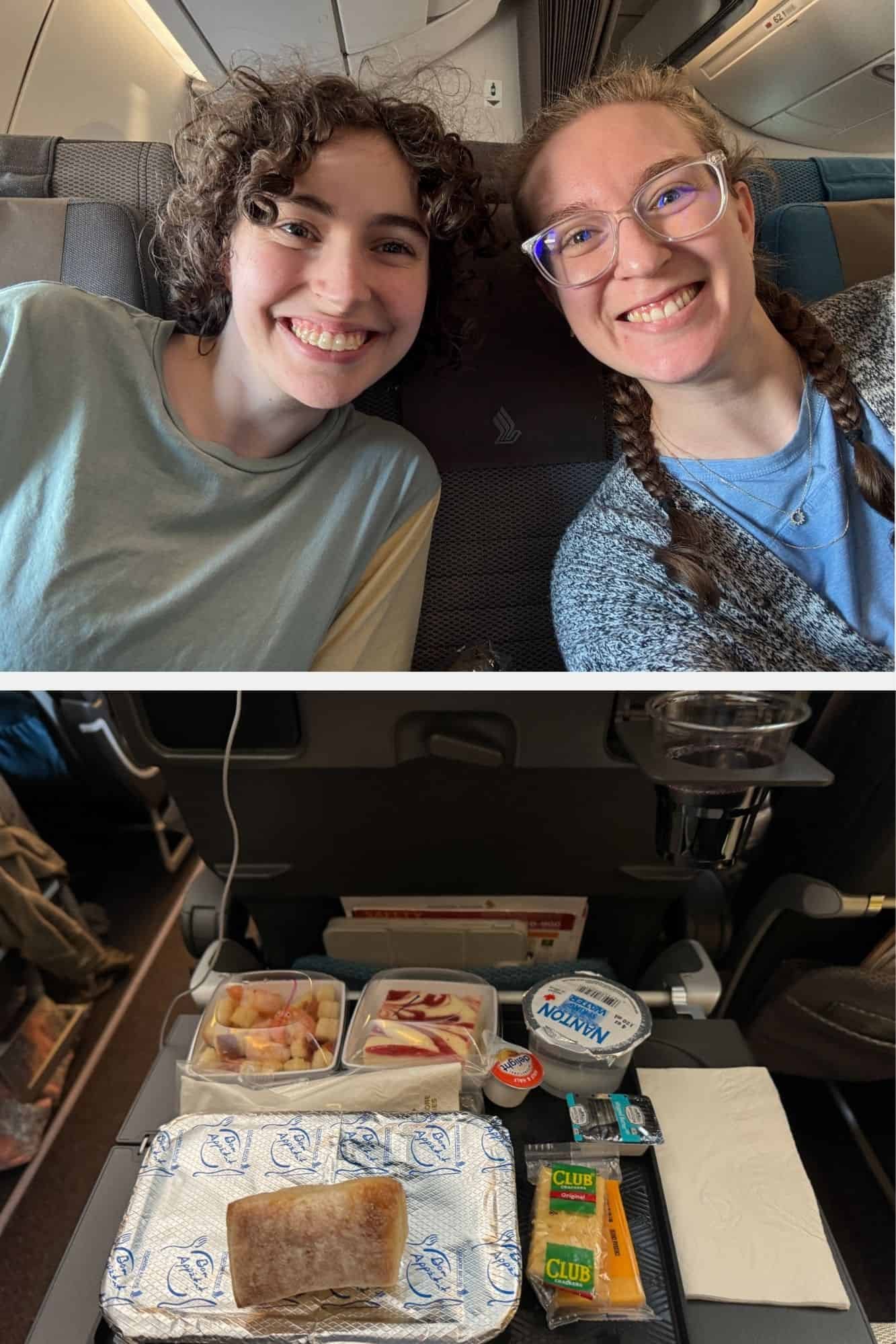
Rachel & Ellie on our Singapore Airlines flight from San Francisco to Singapore. We enjoyed 3 meals during the 16.5-hour journey. All for a grand total of $28, thanks to credit card miles & points!
Prioritizing Convenience Over Cost Without Thinking It Through
Airport hotels and private transfers feel like the easy choice when you're tired or time-pressed. But "easy" frequently means significantly more expensive, and advance planning usually finds an option that's both affordable and still comfortable.
Here are the specific levers that consistently make the biggest difference:
Location offset. Staying 20 minutes outside a major theme park area can cut accommodation costs in half, especially where free shuttles are available. In cities like London, Tokyo, and Taipei, public transit is genuinely excellent and far cheaper than private cars. Walking between neighborhoods often becomes one of the better parts of the day.
Vacation homes for multi-generational groups. Renting a vacation home with a shared kitchen and living space is almost always a better value than booking multiple hotel rooms. It also gives everyone room to decompress, which matters more than most families anticipate when you're traveling with multiple generations under one roof.
Free breakfast math. This one gets overlooked because the room rate looks higher on the surface. Run the actual math. For a family of four or five, a hotel that includes breakfast can easily save $60–100 per day compared to a cheaper room where everyone pays out of pocket each morning. Over a week-long trip, that's a meaningful difference.
Direct negotiation for longer stays. Most families don't realize that many hotels, vacation rentals, and boutique properties offer reduced nightly rates for stays of a week or more, especially if you contact them directly rather than booking through a third-party platform. We've saved 15–20% on longer stays this way simply by asking. It takes 30 seconds, and the worst answer you'll ever get is “no.”
House-sitting. This takes the concept even further. We've had extended stays with zero accommodation costs. Our dedicated post on affordable family travel with TrustedHousesitters covers how the whole model works, including our 65-day golf course stay.
Skipping a Detailed Family Travel Budget From the Start
Most families think they've planned their budget when they've really only thought about flights and hotels. That covers roughly half the picture.
Food, local transportation, activities, entrance fees, tips, and the inevitable unplanned moments will easily add 30–40% to your base costs if you haven't accounted for them.
According to Beach.com’s 2026 Travel Trends Report (December 2025), Americans now expect to spend an average of $6,354 on travel in 2026, a 12% increase ($667 more) from 2025.
I'll be honest, building a vacation budget has always been my thing. Give me an Excel spreadsheet and a trip to plan, and I'm genuinely happy. And of everything on this list, this tip saves the most money by a significant margin. Going over budget is painful. Not having one at all is far more expensive.
I learned that the hard way. One trip, I decided to just wing it. No spreadsheet, no framework, no tracking. That vacation ended up being one of the most expensive we ever took. Not because we did anything extravagant. Just because, without a number to bump up against, every small decision defaulted to yes. It adds up faster than you'd believe.
Here's the framework I use as a starting point: roughly 25–30% of the total budget goes to transportation, 20–25% to accommodation, 15–20% to food, and 10–15% to activities. It's not complicated, but writing it down before you book anything changes everything.
Build in a 10–15% buffer and treat it as untouchable unless genuinely needed. For a comprehensive look at how full-time travel families manage this across months rather than weeks, our post on how to travel full-time with family goes into the full financial structure.
Ignoring Hidden Fees Until They Show Up on Your Bill
Hidden fees are frustrating because they feel unavoidable, but they usually aren't. They're just not advertised upfront.
Baggage fees on budget carriers can run $50–100 per bag, per leg. Resort fees at some Caribbean and Las Vegas properties can add $50 or more to the headline, per-night room rate. Car rental deposits range from $200 to $500. Currency exchange losses, typically 3–5% per transaction, add up fast across a multi-week international trip if you're using the wrong card.
Before booking anything, read the full cost breakdown, not just the headline price. When traveling internationally, a card with no foreign transaction fees or a debit card that reimburses ATM fees worldwide will save you real money. This is one of several financial details we cover in our 20 tips for international family travel.
Dynamic ticket pricing. Many theme parks, museums, and major attractions now charge significantly more for tickets purchased at the gate than for tickets purchased online in advance. Disney, Universal, and major European attractions regularly sell at 20–30% higher prices at the door.
Always buy ahead and always check whether your chosen date is a peak-pricing day on the park's own website. The price difference for the same ride on the same day can be significant, depending on when you bought the ticket.
Cancellation policies. Read them before you book, not after. A hotel rate that looks like a deal can carry a fully non-refundable clause that turns a $150 saving into a $600 loss if your plans change. With families, plans change. Always filter for free cancellation options unless you are completely certain of your dates, and even then, read the fine print on what "free cancellation" actually covers.
Factor in destination-specific taxes and levies. Tourist taxes are now standard across much of Europe and are appearing increasingly in U.S. cities. Venice, Amsterdam, Barcelona, and Paris all charge per-person nightly fees that don't appear in the booking price.
Some cities charge by the night, others by the stay, and rates vary significantly. For a family of five staying a week in a high-tax destination, this can add $50–150 to the total that simply wasn't visible during planning.
Florida’s tourism tax structure. This is one hidden cost category most families don't discover until checkout. Theme park food pricing has risen sharply in recent years, with in-park meals and even individual items now drawing significant sticker shock from visitors.
The practical response isn't to avoid the parks, it's to eat before you enter, carry snacks, and plan one in-park meal rather than three. The difference for a family of five across a three-day park visit can easily run $300–$500.
Overpacking & Paying Baggage Fees You Could Have Avoided
Before we went full-time, I would have told you it was physically impossible for five people to travel without checked bags. I was wrong. Since 2024, our entire family has lived out of carry-ons and backpacks, not as a challenge or an experiment, but because we did the math on baggage fees and decided that money had better uses. A family of five paying $100 or more per extra bag, each way, can add $1,000 or more to a trip before anyone steps on the plane.
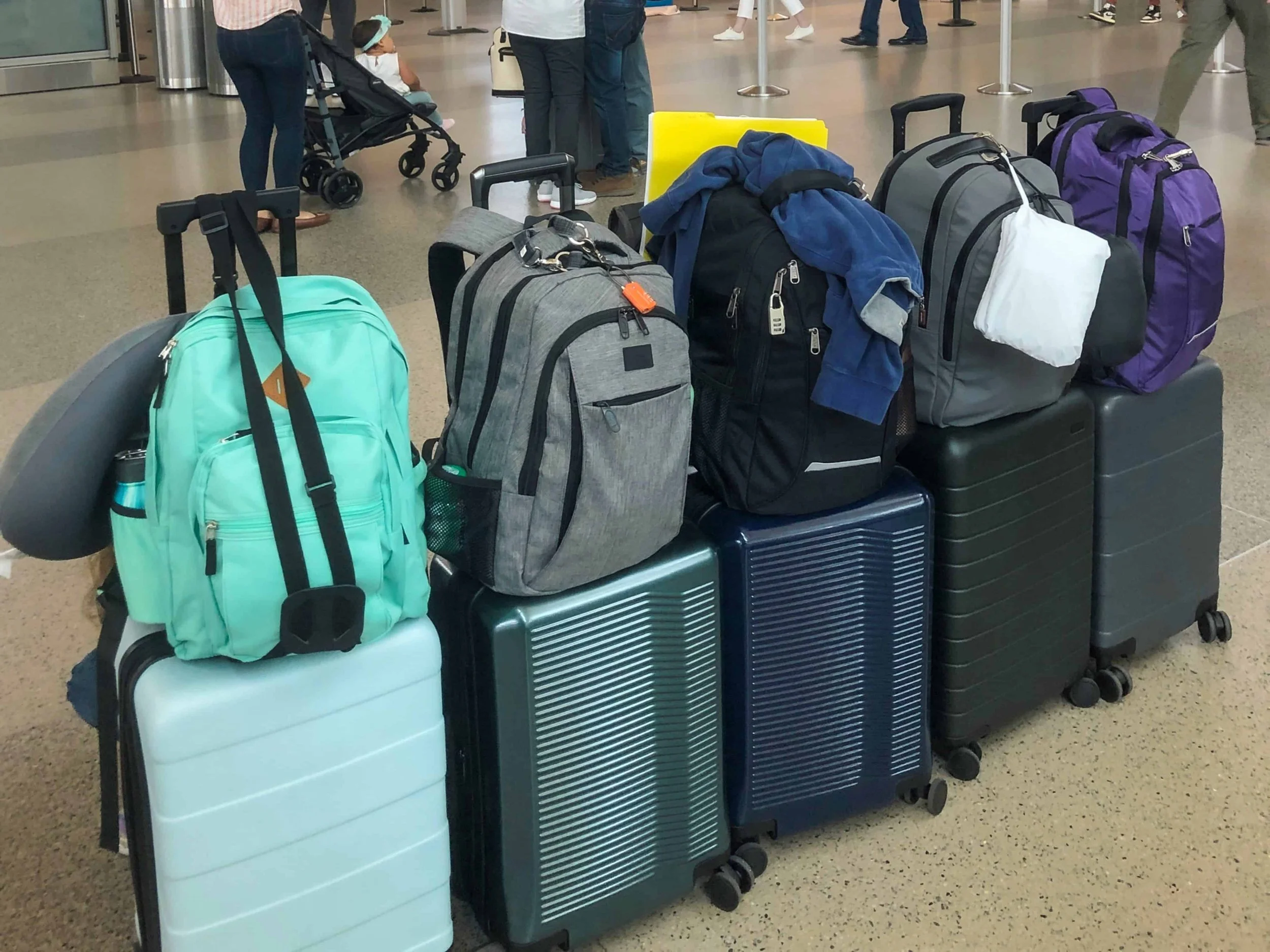
Even as a full-time travel family, our travel gear consists of 1 carry-on-size roller bag & 1 backpack each. It makes for cheaper & simpler travel days.
Pack versatile items, check weight limits at home before you leave, and be honest about "just in case" items. Most destinations have stores if you genuinely forgot something essential.
We go into the practical side of how we got there in our post on embracing the nomadic lifestyle, including how we evaluate every item before it earns a spot in the bag.
For the logistical side of overpacking, what to cut, how to organize, and what the airport experience looks like, our guide to common family travel mistakes covers that in detail, too.
Insider Tip: Packing cubes genuinely compress clothing and keep bags organized. A small investment that pays off every time you navigate airport security.
Paying Full Price When Free or Discounted Options Exist
Some of the best days we've had as a family have cost almost nothing. Not because we were trying to be frugal, but because we were paying attention to what was actually happening around us. Such as a beach afternoon in Le Pouligen, France, that no one planned but became one of our favorite experiences. The memories that come up most often at the dinner table are rarely from the days we spent the most money.
Free walking tours, local festivals, beach days, and open-air markets consistently rank among the best experiences across every age group in our family. In the U.S., the America the Beautiful Annual Pass costs $80 for U.S. residents and covers more than 2,000 federal recreation sites for a full year. Outstanding value for a family that travels frequently.
Las Vegas is a destination most families assume is expensive, but it doesn't have to be. We put together a guide to 20+ free things to do in Las Vegas with kids after realizing just how much the city offers for free. The same principle applies in cities like London, where we found dozens of free activities for families with teens: free museums, free landmarks, and free parks that filled multiple days without spending a dollar on admission.

A look at some of the stunning floral display pieces, located in the Conservatory & Botanical Gardens at the Bellagio Hotel & Casino.
When paid attractions do make sense, city passes can cut costs by 30–40%. GoCity bundles popular attractions at a discount and is worth checking before booking anything individually.
Theme park tickets are one of the few travel expenses where buying through a third-party discount platform consistently delivers real savings with no downside. Tickets purchased online in advance for Disney, Universal, and SeaWorld are regularly 20–30% cheaper than gate prices, and the tickets themselves are identical.
Undercover Tourist is our preferred source for this because their pricing is reliable, their customer service is straightforward, and the savings for a family of five on a multi-day park visit are substantial. This is not a tip that requires any trade-off. You get the same ticket for less money by planning 30 minutes ahead.
Skipping Family Travel Insurance
We save this one for last because it carries the highest potential consequence by a wide margin.
Standard U.S. medical insurance almost never covers you internationally. A single unexpected medical situation abroad can cost tens of thousands of dollars without coverage.
The U.S. State Department is explicit: Medicare and Medicaid do not cover care outside the United States, and the vast majority of employer-sponsored or Marketplace plans offer zero or extremely limited emergency-only coverage abroad. They also rarely cover an emergency medical evacuation, which can run $20,000 to $200,000, depending on your location and condition. If you're planning any international travel, it's also worth checking the State Department's Travel Advisories for your destination before you go.

The stunning skyline of Kuala Lumpur, Malaysia, at sunset.
I can speak to this one from painful personal experience. On a trip to Kuala Lumpur, I needed specialist visits, scans, and medication. The total bill came to $3,000. We had travel insurance. We filed the claim confidently. And then the insurance company denied it.
The policy was riddled with fine print we hadn't read carefully enough. When I filed, they found a loophole and used it. The $3,000 came straight out of our travel fund, and it hurt.
What I know now that I didn't know then: the problem wasn't that we bought travel insurance. The problem was how we bought it. I treated it like a box to check rather than a financial decision worth real attention. Most of the time, nothing goes wrong… until it does, and by then it's too late to read the fine print. That experience changed how we evaluate travel insurance entirely.
Cheap travel insurance that doesn't pay out isn't insurance, it's a false sense of security with a price tag attached.
Insider Tip: Always call your provider to confirm (don’t assume), then buy dedicated travel medical insurance that’s designed to step in where your domestic plan stops.
| Budget Category | Peak Season | Shoulder Season | UFA Budget Approach ✓ |
|---|---|---|---|
| Flights Family of 5, avg. domestic | $1,800–$2,500 | $1,100–$1,600 | $900–$1,200 with points + advance booking |
| Accommodation 7 nights | $1,800–$2,800 on-site | $900–$1,400 off-site w/ shuttle | $700–$950 vacation rental with kitchen |
| Theme Park Tickets 3 park days, 5 people | $2,100–$3,200 | $1,600–$2,400 | $1,200–$1,600 via Undercover Tourist + advance purchase |
| Food 7 days | $1,000–$1,400 eating out | $700–$900 mix | $350–$450 with kitchen + 1 dinner out/day in park |
| Transportation rental car or rideshare | $400–$600 | $300–$450 | $280–$380 rental off-airport |
| Extras souvenirs, incidentals, tips | $300–$500 | $200–$350 | $150–$250 with a firm kids' souvenir budget |
| Travel Insurance | $180–$320 | $150–$280 | $300-$400 Non-negotiable — always budgeted |
| TOTAL | $7,580–$11,320 | $4,950–$7,380 | $3,580–$4,830 |
Park ticket estimates use current Walt Disney World and Universal Orlando pricing. Shoulder season dates for Orlando: January, September, and early December. Off-site accommodations with free park shuttles are available in the I-Drive and Kissimmee corridors and can reduce nightly costs by 30–50% versus on-property hotels.
The Bottom Line
None of these mistakes is inevitable. They're just easy to miss when you're excited about a trip and moving fast.
The families who travel well consistently do a few things right: they plan their full budget before booking anything, they stay flexible on timing and accommodation type, and they treat points and insurance as essential tools rather than optional extras.
Squaremouth’s January 2026 report on “What’s Driving Travel in 2026” reinforces this, noting that 46% of travelers cite budget constraints as their top barrier, while 63% say they are more likely to book when they have the right travel insurance policy. Which proves that smart use of rewards and protection is how families successfully offset rising costs and travel with confidence.
Get those pieces right, and the rest tends to fall into place. Travel is too good to let preventable financial mistakes get in the way of it.
Want to tackle the non-financial (and often way more chaotic) side of family trip planning? Our guide to the logistical family travel mistakes we’ve made is the perfect companion read.
Got a budget hack that’s saved your crew serious money? Drop it in the comments below, we read every single one and love swapping ideas inside our UFA Community.
Craving more real-talk travel tips, honest lessons from full-time life on the road, and updates from our latest family adventures with the girls?
Join the UFA Community and subscribe to our complimentary weekly newsletter. We’d love to have you along for the adventure.
FAQs: Family Travel Budget Questions
What's the most common family travel budget mistake?
We have found that skipping a full cost breakdown before booking is the most common mistake among family travelers. Most families only budget for flights and hotels and get surprised by everything else once they're on the road.
How far in advance should you book flights for family travel?
We recommend booking 3–6 months in advance for domestic trips and 6–12 months for international trips. Setting price alerts through Skyscanner or Google Flights lets you move quickly when a good deal appears.
Is travel insurance worth it for family trips?
Yes, especially for international travel. We highly recommend buying travel insurance for family trips. The U.S. State Department specifically recommends it because Medicare and Medicaid don't cover care abroad. A single medical emergency without coverage can cost more than the entire trip. A cheap policy with bad fine print can be just as costly as no policy at all.
How do you save money on food while traveling as a family?
We book accommodations with kitchens whenever we can, and make finding the nearest market one of our first priorities. We plan at least two meals per day in-house. It's cheaper and almost always a more interesting experience than eating in restaurants every meal.
What's the best way to use credit card points for family travel?
We use credit cards to earn points on everyday spending and redeem strategically for flights or hotel stays. Pay balances in full every month, so interest doesn't offset the value.
What is the America the Beautiful pass, and is it worth it for families?
It's a federal annual pass that covers entrance fees at more than 2,000 national parks and recreation sites across the U.S. At $80 for U.S. residents, a family planning even two or three national park visits in a year pays for it immediately.
About the Author
Kevin is the co-founder of Uncommon Family Adventures. Since 2024, he's been traveling full-time with his family across 15+ countries on four continents. A life they built deliberately after deciding that someday wasn't a good enough plan.
With a background in math, economics, and analytics, he manages the financial systems behind their nomadic lifestyle. A denied $3,000 insurance claim in Kuala Lumpur taught him more about reading the fine print of a policy than any article ever could.
Sources:
Luxury Link. (2026, January 19). Travel Inflation: Where Family Vacation Costs Have Risen the Most. https://www.luxurylink.com/blog/family-vacation-costs-risen-most/
SquareMouth (via Motley Fool). (2025, September 29). Data cited in “The Average Cost of a Vacation in 2025.” https://www.fool.com/money/research/average-cost-of-a-vacation/
Beach.com. (2025, December 9). 2026 Travel Trends Report: Why Americans Are Spending More. https://www.beach.com/trends/2026-travel-trends-report/
U.S. Department of State. Travel Advisories and guidance on Medicare/Medicaid coverage abroad. https://travel.state.gov/content/travel/en/traveladvisories.html (and https://travel.state.gov/content/travel/en/international-travel/before-you-go/your-health-abroad.html)